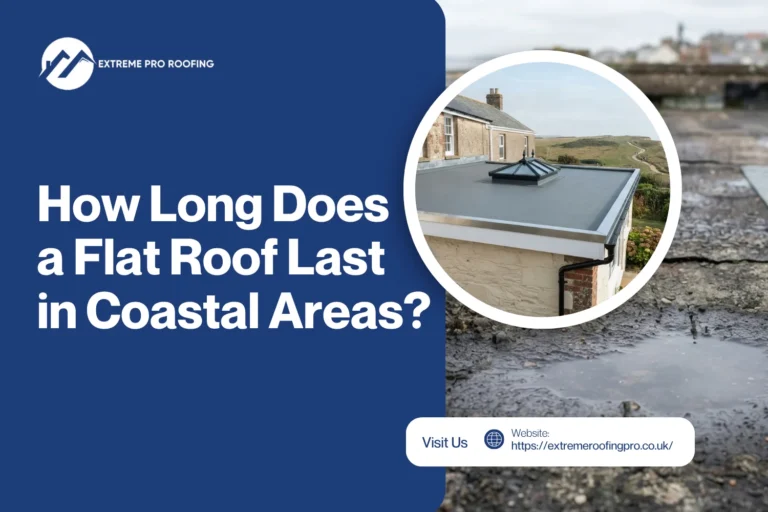
Salt air and wind wear coastal flat roofs faster than inland ones, starting at the edges, joints and outlets. Fibreglass and rubber outlast felt by a wide margin, and regular checks, clear drains and early repairs decide whether you reach the top of each range.
How long does a flat roof last on the coast? Typically, felt lasts 8 to 15 years, fibreglass 20 to 30 years, and EPDM rubber 25 to 35 years, roughly two to five years less than the same roof would manage inland.
This guide covers how each material performs by the sea, why edges and joints fail first, which system suits which property, and when to repair, overlay, or replace. At Extreme Pro Roofing, we deliver flat roofing in Dorset from survey to finish, so the advice comes from real roofs.
How Long Should a Flat Roof Last in the UK? Inland vs Coastal
Most flat roofs in the UK last 10 to 40 years, depending mainly on the covering. That is the general lifespan UK homeowners can plan around. So how long do flat roofs last once the sea is involved? The table shows how the figures shift.
These are realistic figures for a well-installed roof, not best-case claims. Poor workmanship or neglect can push any of them below the bottom number.
Why Do Coastal Conditions Shorten Flat Roof Life?
Salt, sunlight, wind and daily temperature swings each do a little damage. Together they wear a roof steadily.
Salt air
Salt settles on every surface and stays there until rain washes it off. Over the years, it corrodes metal edge trims and fixings and can weaken adhesive at joints. The closer you are to the sea, the heavier the deposit.
UV and wind
UV light dries out bitumen and some membranes, leaving them stiff and brittle. Wind then finds any loose edge and works at it, lifting trims and stressing seams.
Temperature swings
A sun-warmed roof surface meets cool sea air within hours. The covering expands, then contracts, and this thermal movement slowly opens laps, seams and flashings.
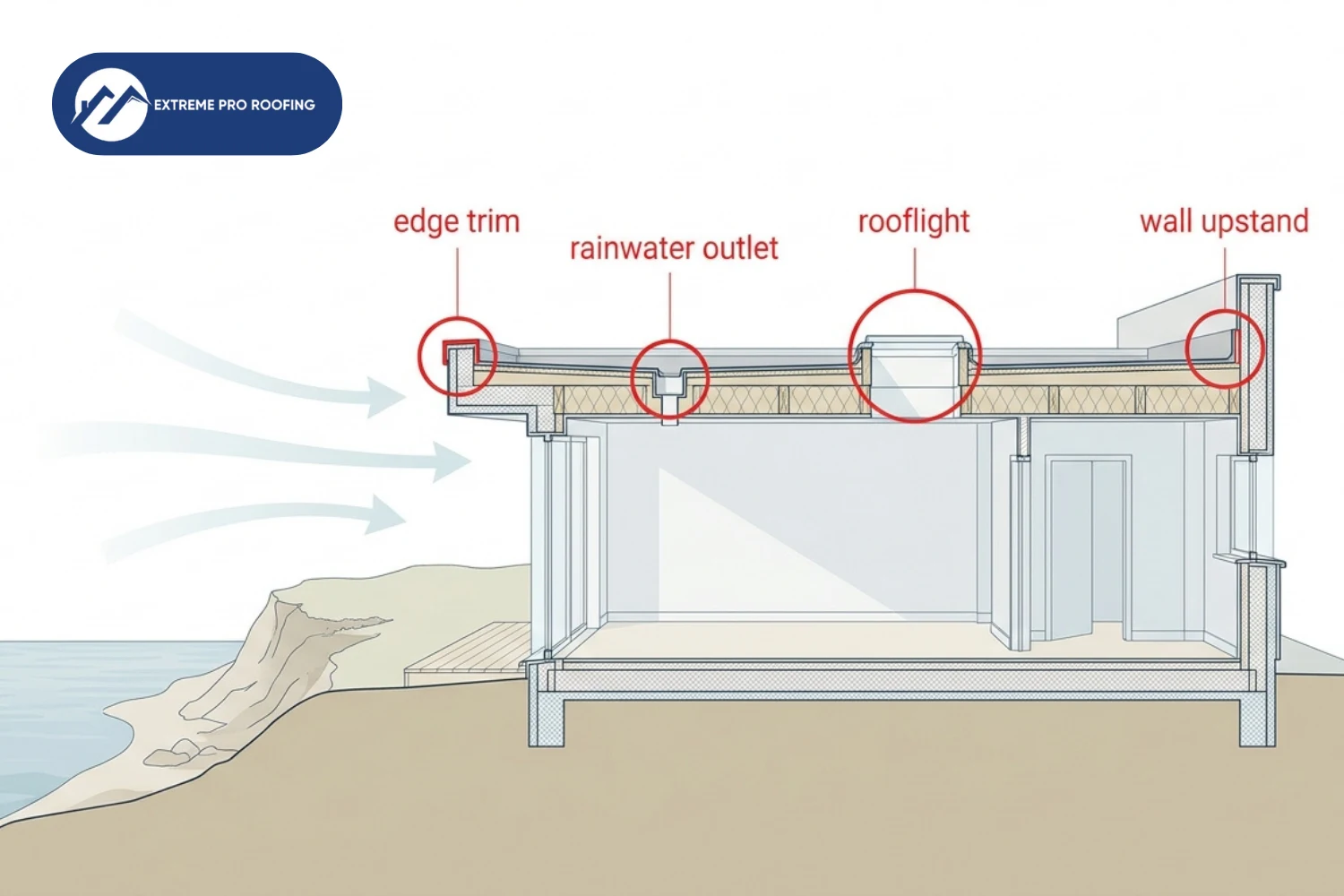
Why edges, upstands and outlets fail first
The open middle of a flat roof has little to snag on or move against. Problems usually start where the covering meets something else:
- Edge trims and drip edges
- Upstands against walls
- Rooflights and pipe penetrations
- Rainwater outlets
These spots also take the most wind pressure and movement. That is why a seafront roof in Bournemouth or Southampton usually ages faster than one tucked inland near Salisbury.
Slate is thin, tough natural stone. It sheds water well and can last 75 years or more. It costs more at first, yet it rarely asks for attention.
How Long Will a Flat Roof Last Near the Sea, by Material?
Each covering ages in its own way, so these notes cover what the table can’t show.
How Long Does a Felt Roof Last on the Coast?
A felt roof typically lasts 8 to 15 years by the sea. It has more seams than any common system, so it has more places for salt and movement to get in. High-performance torch-on felt does better than basic layers, but it rarely suits an exposed seafront.
How Long Does a Fibreglass Flat Roof Last?
Fibreglass sits in the upper middle of the table, and how close it gets to 30 years depends largely on the deck beneath it. GRP, or glass-reinforced plastic, cures into one rigid, joint-free surface. That rigidity is also its weakness: if the deck flexes, the layer can crack.
How Long Does a Flat Rubber Roof Last?
Rubber tops the table. EPDM is a synthetic rubber that stays flexible as temperatures change, so it copes with movement better than rigid coverings. Some manufacturers quote 40 to 50 years for premium membranes, but sea air and real-world detailing make the lower range the safer planning figure.
How Long Does a Liquid Plastic Roof Last?
A liquid plastic roof typically lasts 15 to 25 years on the coast. It is applied as a liquid and cures in place, so it suits roofs with lots of awkward details. Its life depends heavily on the system chosen and how well the surface beneath is prepared.
How to Help a Coastal Flat Roof Last Longer
Roofs are risky to walk on, so do visual checks from the ground or a window and leave anything on the surface to a roofer. A ⟦seasonal roof maintenance checklist for coastal homes⟧ covers the whole roofline. For a flat roof, these habits matter most:
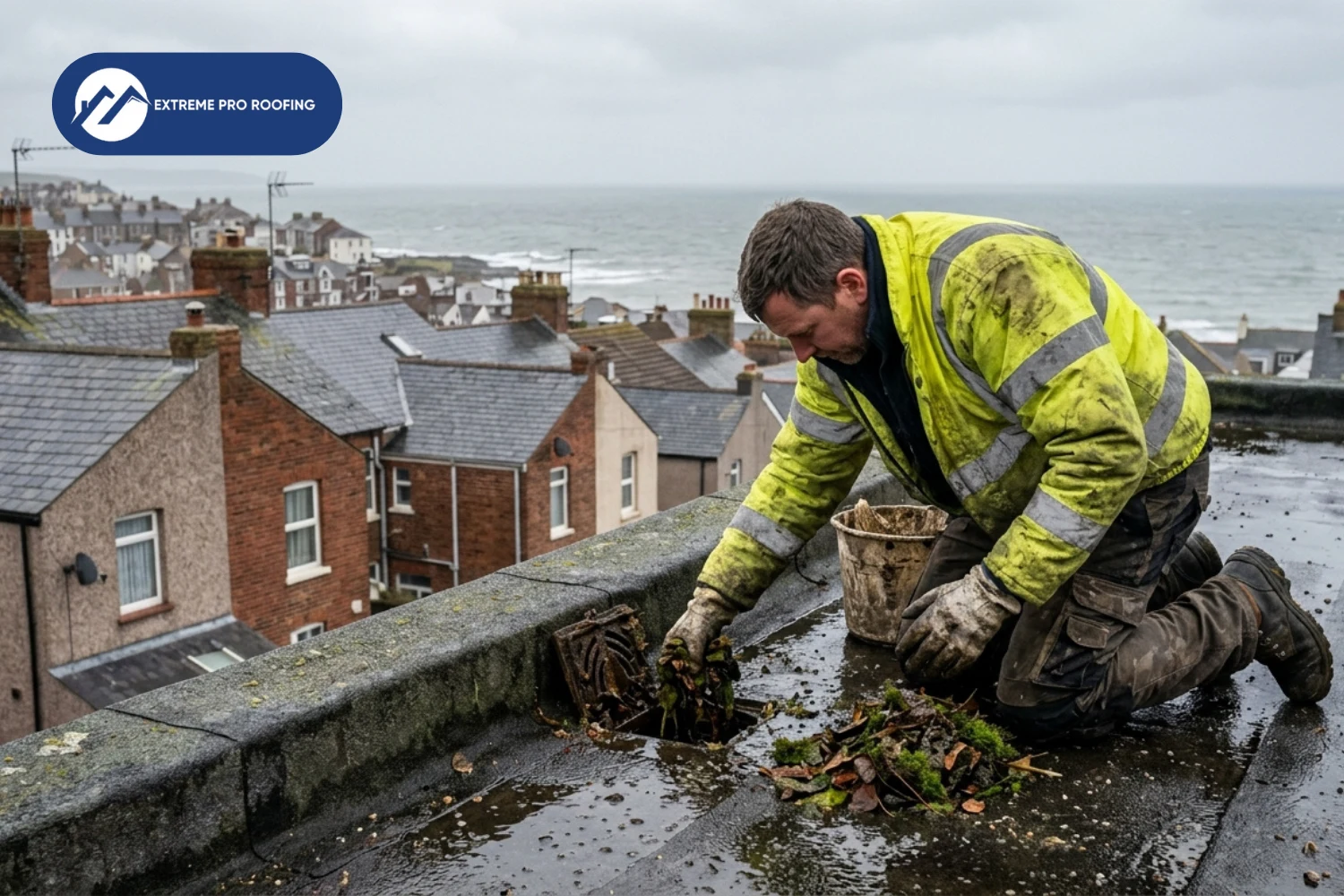
- Keep outlets clear. Blocked drains let water sit on the surface, which ages any covering faster.
- In dry weather, rinse salt and grime off gently with clean water and a soft brush, never with a pressure washer.
- Check trims and fixings from the ground or a window for rust and lifting edges.
- Look the roof over after any storm. The Met Office weather warnings are a good prompt.
- Repair small splits early, before they become leaks.
Signs Your Coastal Flat Roof Is Near the End
Most roofs warn you before they fail. Watch for:
- Repeated patch repairs in the same area
- Soft or spongy areas, which a roofer will feel underfoot (never walk on a roof you suspect is rotten)
- Water stains or damp on the ceiling below
- A surface that has turned brittle, cracked or lost its granules
- Edges or trims that are lifting
- Water still sitting on the roof two days after rain
If water is already coming in, an emergency roofing call-out can stop the damage from spreading.
Repair, Overlay or Replace? How to Decide
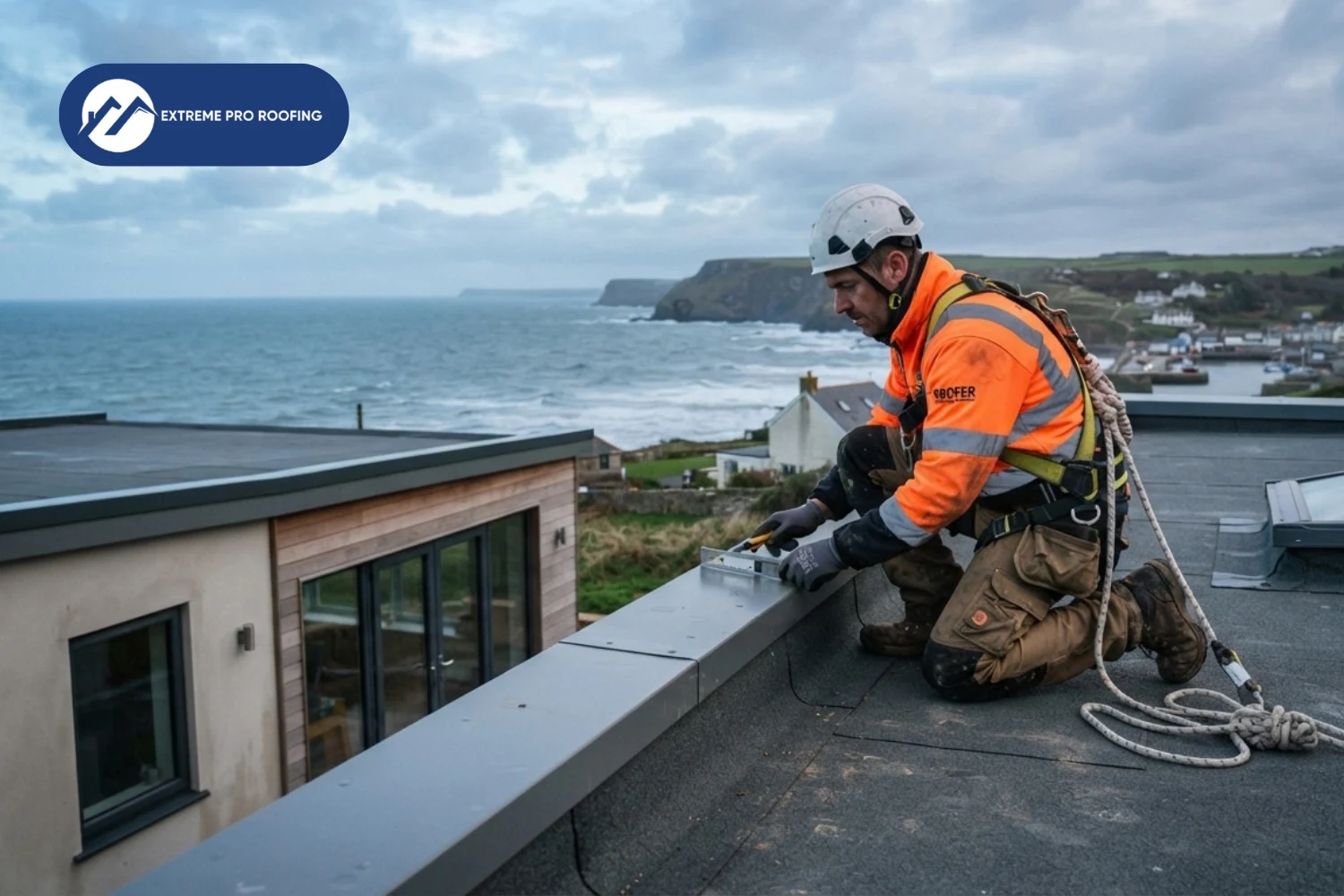
A single local fault in an otherwise sound roof, such as a split seam or a worn outlet, usually calls for our roof repair services. An overlay saves time and strip-out costs, but it suits only a roof that stays dry throughout and is firmly bonded to a sound deck. NFRC sets out the considerations in its guidance on overlaying an existing flat roof.
If the insulation is wet, the timber is soft, or faults keep reappearing elsewhere, the roof needs roof installation and replacement instead. A proper survey checks the deck, insulation, seams, trims, and drainage first, and those findings decide which of the three options makes sense.
Frequently asked questions