A leaking gutter joint can quietly cause damp walls, stained brickwork and rotten fascia boards, and it can lead to damp indoors if left. Fixing a leaking gutter joint usually comes down to one of three jobs: reseating the joint, replacing the worn gutter union, or resealing it with the right sealant. Most uPVC joints take under an hour and cost a few pounds in parts. Smearing silicone over a drip rarely lasts, which is why leaks keep returning. Here is what works, in the right order.
How to Fix a Leaking Gutter Joint: Step by Step
Work through the steps in order. Many joints stop dripping by step 4, so don’t jump straight to replacing parts.
What You’ll Need
- A ladder and a helper to foot it
- A hose
- A cloth, a small brush and gloves
- A screwdriver or drill
- A new gutter union, if the checks don’t solve it
- Gutter sealant, if you are resealing
Step 1: Set Up Safely
Stand the ladder on firm, level ground and rest it against the wall, not the gutter, which can crack under the load. Have someone hold it. Falls from ladders are a real danger, so read the HSE ladder safety guidance before you climb. If the joint is above first-floor height, leave it to a roofer.
Step 2: Find the Exact Source of the Leak
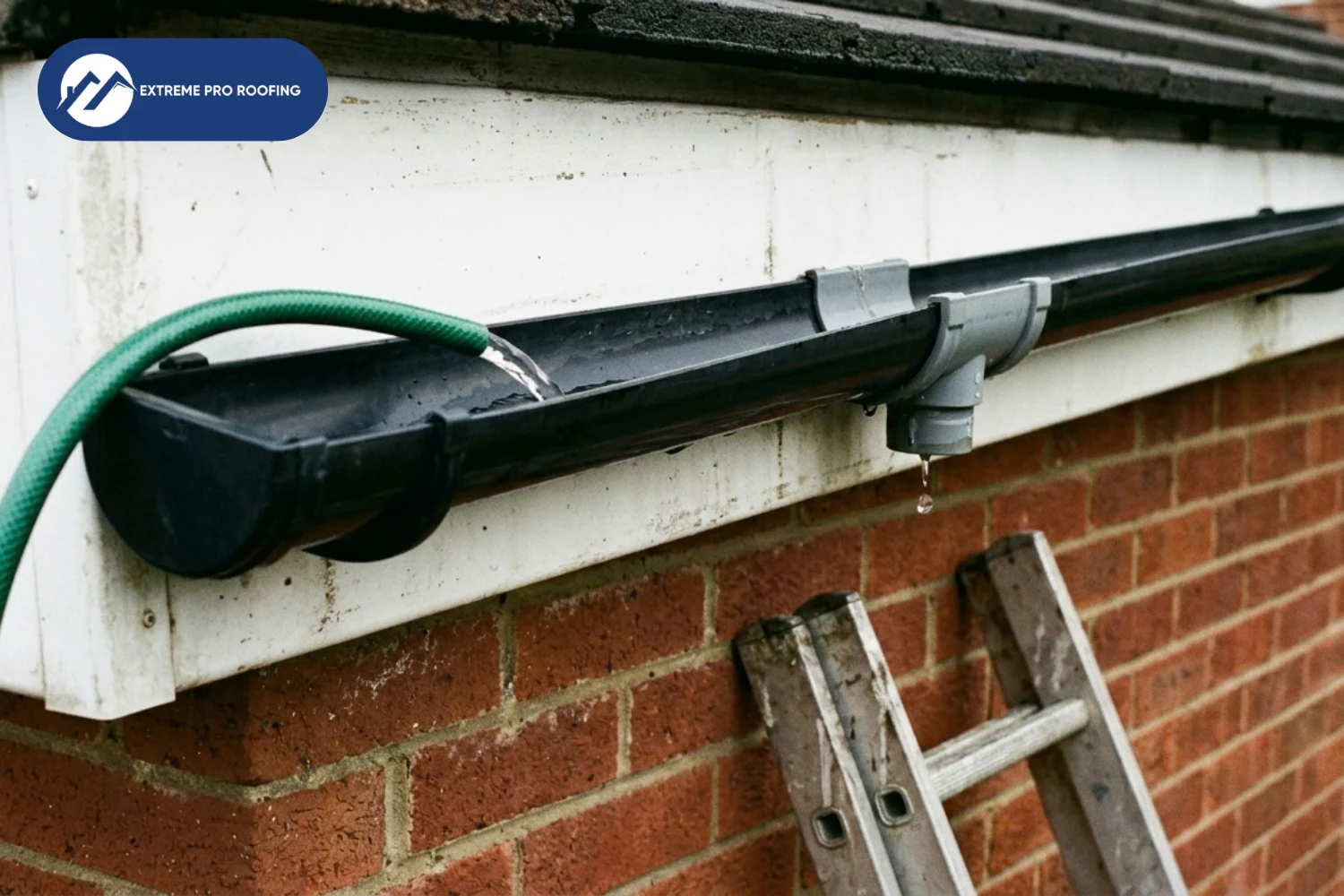
Dry the joint with a cloth, then run a hose in from the high end of the gutter. Watch where the water first appears and mark the spot. Water can travel along the underside of the gutter before it drips, so the real leak may be a short distance from where you see it.
Also check that the water is actually reaching the gutter. The roof edge should discharge into the middle of the gutter. If it overshoots, it can look like a leaking joint when the joint is fine.
Step 3: Clear and Clean
Clear any blockage at the outlet, because a blocked outlet pushes water up and out of the joint. Then scoop out debris on both sides of the joint and wipe grit from around the seal.
Step 4: Check the Union, the Sag and the Fall
- Clip: Check the union is clipped in properly at the back.
- Sag: Look for a dip. If lifting the joint level stops the drip, screw it to the fascia through its fixing point. If the span is unsupported, add a bracket close to each side of the joint.
- Fall: Check the gutter is level, with a slight fall towards the outlet. If water stands in the gutter after rain, the fall is wrong. That needs the brackets adjusted, and no amount of sealant will fix it.
Test with the hose. If the joint stays dry, you’re done.
Step 5: Still Leaking? Choose Your Fix
Replacing the union is the more reliable gutter leak repair. Use sealant only if the part is no longer made or the joint just weeps.
Option A: How to Stop Gutter Joints Leaking by Replacing the Union
- Unclip the gutter ends from the old union and wipe them clean.
- Take the old union to a merchant. Standard 112mm half-round parts usually fit across different makes.
- Clip the gutter ends onto the new union up to its marked fitting line, and no further. This leaves room for the plastic to expand in warm weather.
- Check that it is level with a spirit level.
- Screw the union to the fascia through its fixing point.
Option B: How to Apply Gutter Sealant
Choose a dry, mild day, because sealant will not grip wet or dirty plastic.
- Clean and dry every surface first.
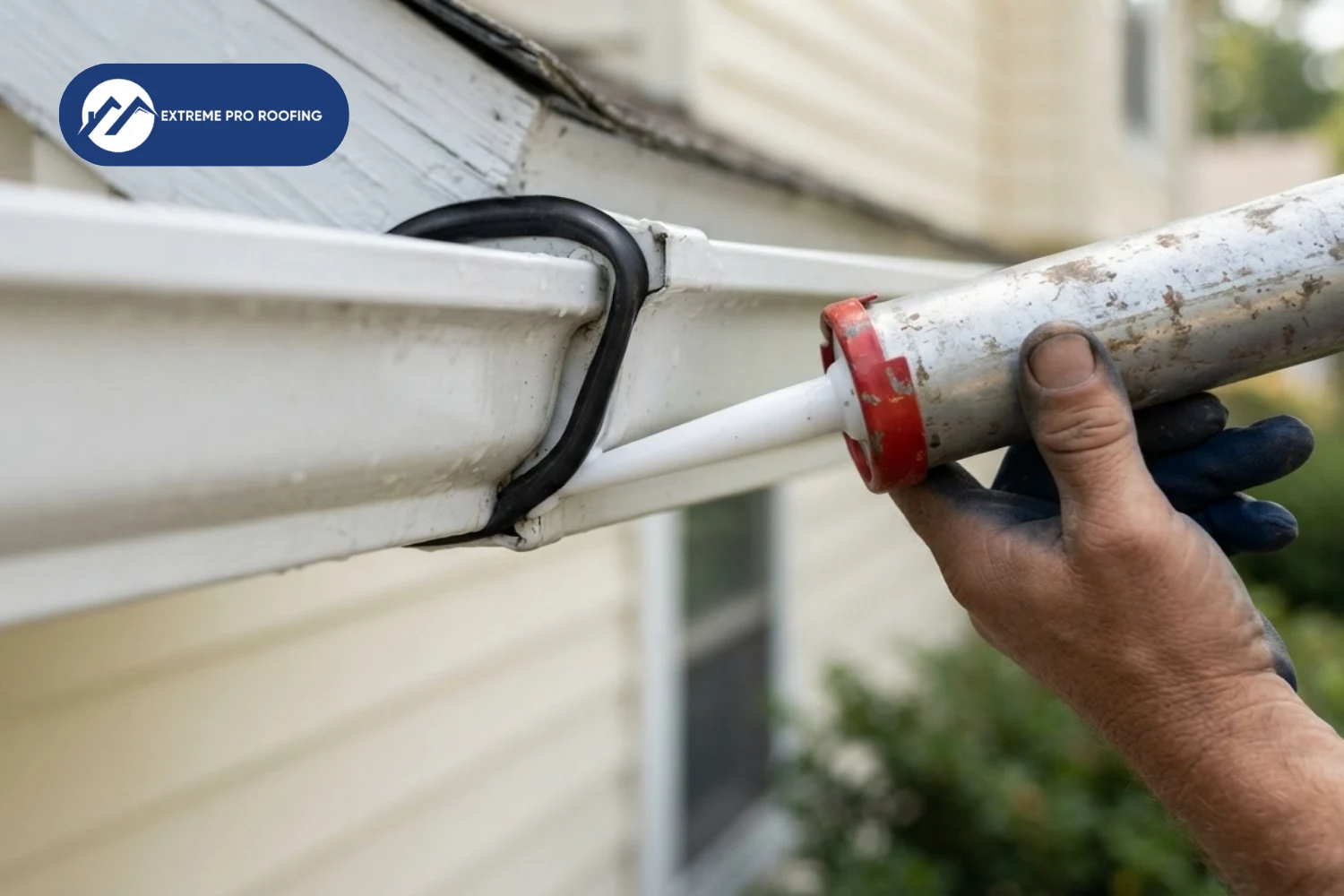
- Use sealant made for gutters. General silicone cracks as the gutter moves.
- Lift the rubber seal, bed the sealant under it and press the seal back into its seat, rather than smearing it over the top.
- Leave it to cure before testing. Check the tube for the cure time, which is often around 24 hours.
Treat this as a stopgap on an old gutter. A new union will last longer.
Step 6: Test Properly
Run the hose and watch the joint for several minutes, not seconds. Then look at the fascia and soffit behind it for staining or soft wood. If you find any, the problem is bigger than a joint.
Why Do Gutter Joints Leak?
Gutters expand and shrink with the weather, and the joint is where that movement shows up first. The usual causes are:
- A worn or hardened rubber seal
- A joint that has come unclipped or is sagging
- A gutter with the wrong fall, so water pools at the joint
- Grit trapped in the seal
- A blocked outlet pushing water up and out of the joint
How to Keep Gutter Joints From Leaking Again
- Clear the gutters at least twice a year, more often near trees.
- Check the joints after storms and hard frosts.
- Fix sagging sections and loose brackets early.
- Replace old unions before they fail.
When to Call a Professional
Some jobs are not worth the risk. Leave them to a roofer if:
- The joint sits above first-floor height
- The gutter is aluminium or cast iron, where joints are sealed or riveted and much harder to redo
- The fascia behind the gutter is soft or rotten
- The leak keeps coming back
For anything beyond a simple joint, our guttering repairs across Dorset cover fixing leaks, sagging runs, and cracked joints, so we fix the real cause once.
Frequently asked questions