Five main types suit a conservatory roof conversion: polycarbonate, glass, solid tiled, solid insulated panel and hybrid. Solid roofs insulate best, glass gives the most light, and hybrids balance both. This guide explains each type’s heat, light, noise, lifespan, and price.
The main conservatory roof types are polycarbonate, glass, solid tiled, solid insulated panel and hybrid. Polycarbonate is the cheapest, glass lets in the most light, and solid conservatory roofs insulate best. A tiled roof is a type of solid roof, and a hybrid mixes solid and glass sections.
Below, we explain each type, covering heat, light, noise, lifespan, and price. A comparison table comes first, followed by a short guide to choosing the right roof.
Conservatory roof types at a glance
Insulation is measured by the U-value in W/m²K, and a lower number means less heat escapes. Price generally climbs from polycarbonate at the bottom to hybrid at the top.
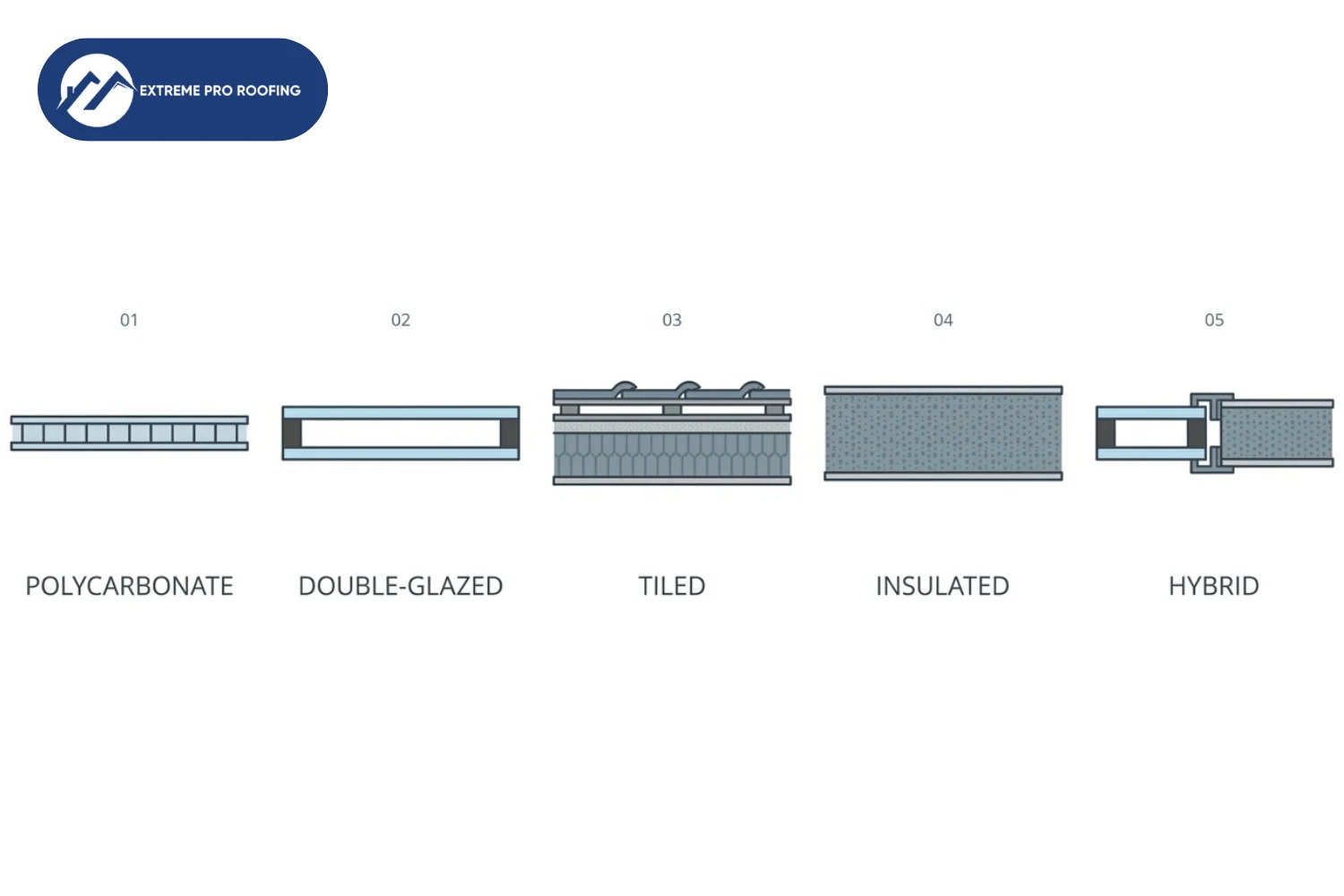
Conservatory Roof Types Explained
Polycarbonate conservatory roof
A polycarbonate roof is made of lightweight plastic sheets with hollow chambers inside. It was the default choice for years, and it is still the cheapest way to cover a conservatory.
Heat: a U-value of roughly 1.6 to 2.4, so the room swings between hot and cold.
Light: plenty, though clear plastic can look cheap.
Noise: rain on thin sheets is loud.
Lifespan: often 10 to 15 years before it discolours.
Thicker multi-wall sheets help a little, but they cannot match glass or a solid roof.
Best for: a tight budget, or a room you rarely use.
Watch out for: early replacement, which can make the saving short-lived.
Glass conservatory roof
A conservatory glass roof uses sealed double-glazed units in an aluminium frame, usually filled with argon gas. It keeps the airy garden-room feel, which is why people choose it.
Three finishes matter:
- Standard double glazing: the basic option, and better than polycarbonate for heat and noise.
- Solar control glass: a coating reflects some of the sun’s heat and cuts glare, so south and west-facing rooms stay more comfortable.
- Self-cleaning glass: a coating lets daylight in and rain breaks down and washes away dirt.
Modern low-emissivity glass roofs reach a U-value of about 1.2 to 1.5. Older units are far worse.
Best for: light, views and rooms used mostly in spring and summer.
Watch out for: the greenhouse effect. A glass roof still runs warm in summer and cold in winter. It also costs noticeably more than polycarbonate.
Solid tiled conservatory roof
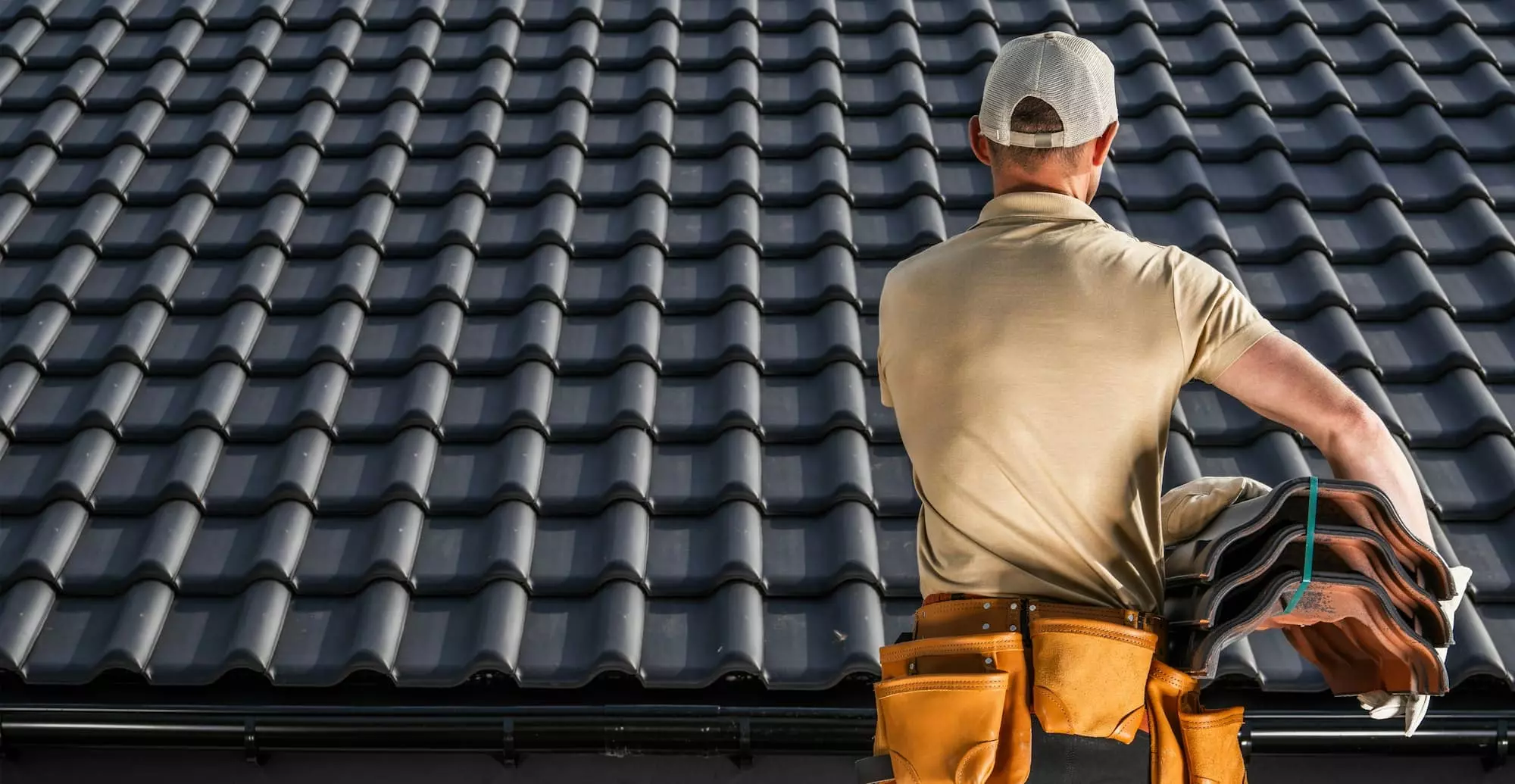
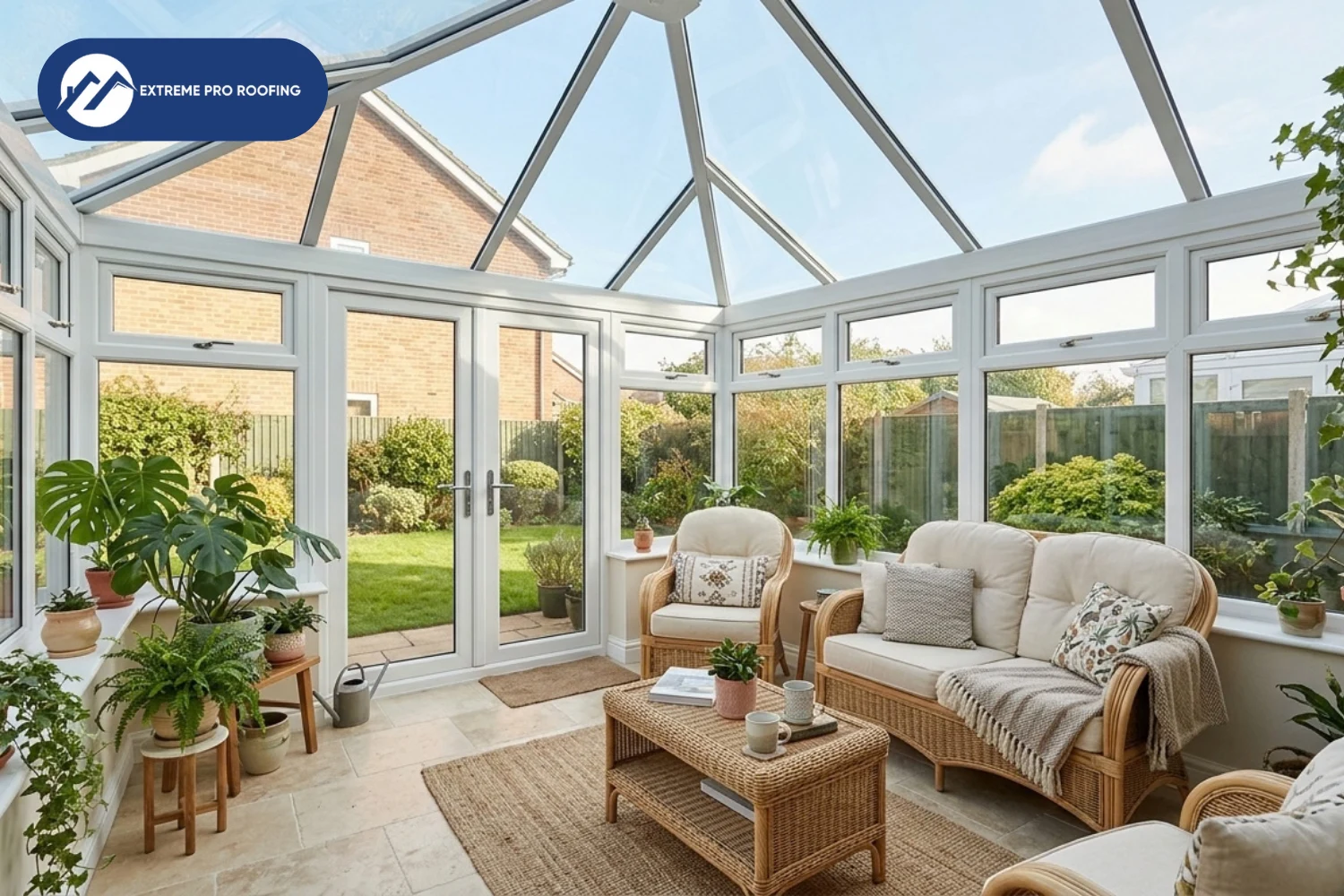
A tiled roof is the most common kind of solid roof. It is built in layers: a lightweight aluminium or timber frame, thick insulation, a waterproof membrane, then tiles or slate fixed to battens. Inside, you can finish it with plasterboard or a vaulted ceiling, so the room feels like part of the house.
- Heat: U-values as low as 0.15, and some systems reach 0.12. That is more than ten times better than polycarbonate.
- Noise: much quieter in rain.
- Look: tiles can match the rest of your roof.
- Lifespan: the longest of any type.
- Light: less, since the roof is opaque.
-
A solid tiled roof is also much heavier than glass or polycarbonate, so check the frame and base first and reinforce where needed.
Best for: turning a conservatory into a true year-round room.
Watch out for: the biggest change to the room’s character. It gets darker and puts more load on the structure.
Solid insulated panel conservatory roof
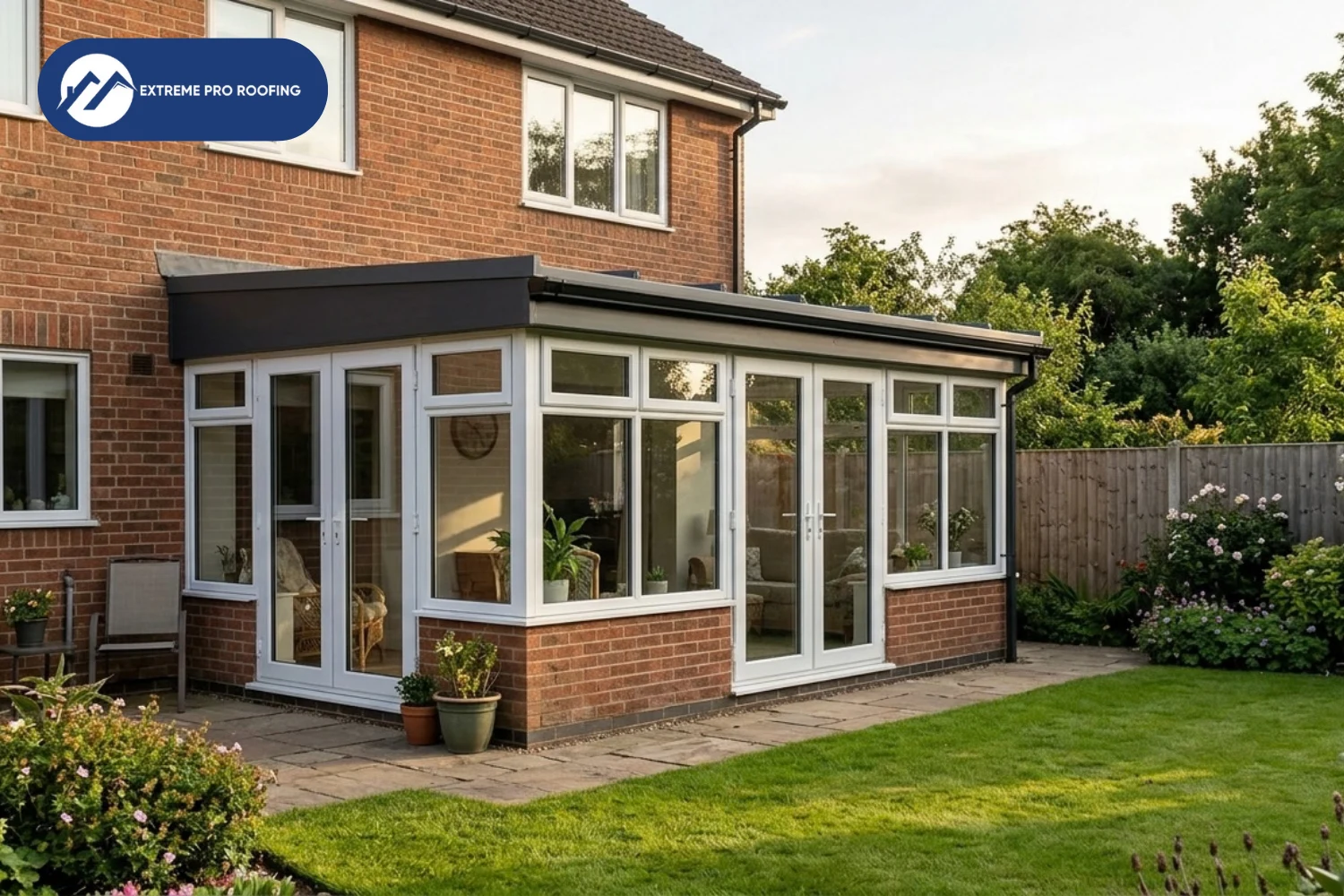
A panel roof replaces the glazing with factory-made insulated sections. They often have an aluminium outer skin and insulation inside, finished in a flat colour such as anthracite grey. They give a clean, modern look, whereas a tiled roof looks more traditional.
These conservatory roof panels differ from tiles in a few ways:
- They are often lighter, so they can suit an older frame.
- They insulate well and keep the room quiet in rain.
- You get fewer finishes than tile, so matching your house can be harder.
- They block daylight in the same way, unless you add roof lights.
Best for: modern homes and frames that can’t support a heavy tiled roof.
Watch out for: quality, which varies. Ask for the U-value and panel thickness in writing.
Hybrid conservatory roof
A hybrid roof combines solid sections with glass. You might have solid tiled ends and a glazed centre, or a solid roof fitted with glass panels or a roof lantern. It keeps the conservatory feel while improving insulation, so the room sits between a garden room and an extension.
- Heat: better than all-glass, because the solid parts cut heat loss.
- Light: good, and you choose where it falls.
- Noise: quieter than all glass.
- Lifespan: long.
Best for: people who want warmth without losing daylight.
Watch out for: price. It is usually the most expensive because it combines two systems.
A solid roof with roof lights is a close alternative.
Which conservatory roof is right for you?
The right roof starts with how you use the room.
Used daily, all year: solid tiled or insulated panel roof.
Used mostly in warm months: glass, ideally with solar control.
Want warmth and daylight: a hybrid, or a solid roof with roof lights.
Tight budget: polycarbonate, accepting the drawbacks.
Aspect matters too. North- and east-facing rooms stay cold the longest, so a solid roof helps most there. South- and west-facing rooms catch more sun, so the glass needs solar control.
In short, polycarbonate and glass keep daylight high and costs lower, solid roofs give you a true year-round room, and hybrids sit in between.
If you have settled on solid, Extreme Pro Roofing carries out solid conservatory roof conversions across Bournemouth, Southampton and Salisbury. The conservatory roof conversion cost varies with size, shape and what your frame needs by way of reinforcing, so it pays to have a roofer assess the room in person before you commit.
Request a free, no-obligation quote, and we will tell you honestly which roof type your frame can take.
Frequently asked questions