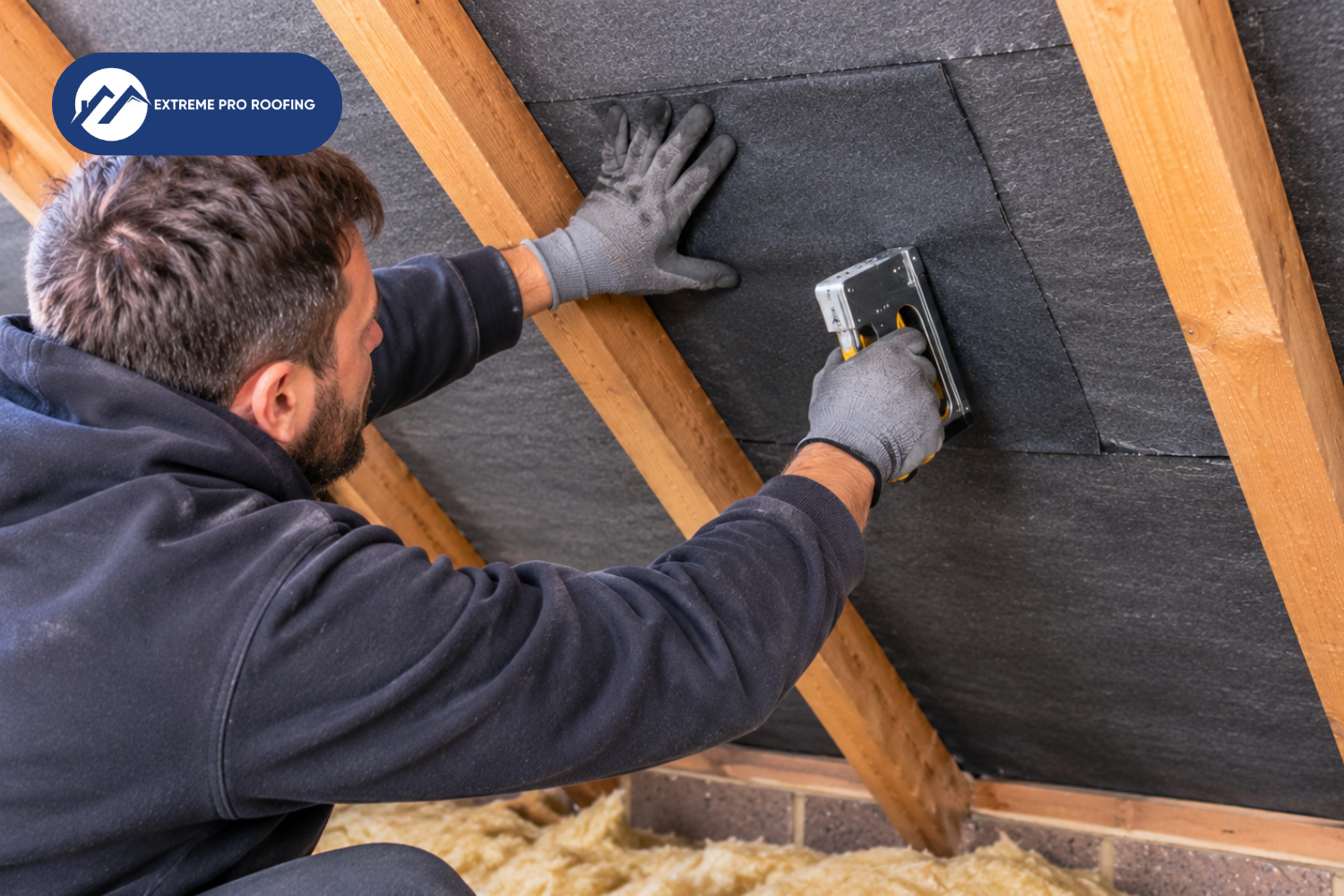
Many UK homeowners ask, Can I repair roof felt from inside the loft? Yes, but only as a temporary fix. Self-adhesive membrane repair tape or a bitumen patch can stop small drafts and drips until a roofer can inspect the roof. It will not fix the real cause, such as a slipped tile or worn felt. A permanent repair needs work from the outside by a qualified roofer.
In this guide, we will walk you through roof felt repair from Inside, how to stay safe while doing it, and which materials to use or avoid. We also explain when a temporary repair is not enough, what a permanent fix involves, and when to call a roofer.
What Is Roof Felt and Why Does It Matter?
Roof felt, also called roofing underlay or sarking felt, is the layer that sits beneath your tiles or slates, on top of the rafters. It acts as a second line of defence. Tiles and slates shed most rain, but wind-driven rain, snow, and condensation can still get underneath. The felt catches that moisture and channels it down into the gutter.
There are two main types in UK homes:
- Traditional bitumen felt (such as 1F type): common in older houses. It is not breathable, so that it can trap moisture in poorly ventilated lofts.
- Modern breathable membrane: used in most newer roofs and re-roofs. It lets water vapour escape from the loft while stopping liquid water from coming in.
Knowing which type you have matters, because you should match your repair materials to it. If you are not sure, take a clear photo and ask a roofer.
Signs Your Roof Felt Needs Repair
Look for these warning signs when you are in the loft:
- Daylight showing through the roof structure where it shouldn’t.
- Visible tears or holes in the felt, often near the eaves, ridge or around chimneys.
- Damp patches or water stains on rafters, insulation or the underside of the felt.
- Dripping water during or after heavy rain.
- Sagging or loose felt hanging between the rafters.
- Mould, a musty smell or rotting timber.
- Drafts coming through the roof space.
- Birds, squirrels or other pests getting in through gaps.
Even one of these signs is worth taking seriously. A small tear or damp patch may look minor, but water can spread under the tiles and damage timber and insulation before you notice. If you spot any of these signs, call a roofing contractor sooner rather than later. A professional inspection will find the real cause and stop a small repair from turning into a bigger one.
Before You Start: Check the Outside First
Water in the loft does not always mean the felt has failed. Often the real cause is on the roof, and the felt can be damaged because of it. Before you do anything inside:
- Look at the roof from the ground, ideally with binoculars.
- Check for slipped, cracked or missing tiles and slates.
- Check the ridge tiles, hips, valleys, and flashing around chimneys.
- Check that gutters are not blocked or overflowing.
Patching the felt alone will not stop water coming in if the tile above is broken. Never climb onto a roof yourself. If you can see an issue, a roofer can fix it safely.
Tools and Materials for Loft Felt Repair
- Self-adhesive breathable membrane repair tape (for breathable membranes)
- Bitumen-based self-adhesive repair tape or patch (for traditional felt)
- Clean cloth to wipe the area
- Scissors or a sharp utility knife
- Torch, gloves, mask and safety glasses
- Crawl board or sturdy loft boards
Make sure the tape or patch is made for roofing use and rated for loft temperature swings. Check the manufacturer’s instructions for compatibility with your felt.
How to Repair Roof Felt From Inside the Loft (Step by Step)
Step 1: Find the Damaged Area
Look for daylight, water stains, or drip marks. On a dry day, you can ask someone outside to gently spray a hose on the roof while you watch inside, but only if it is safe and the person stays on the ground.
Step 2: Clear and Prepare the Area
Gently move insulation aside so you can see the felt. Do not squash or permanently remove insulation. Wipe away dust, cobwebs and moisture so the repair tape can stick. The surface must be clean and dry.
Step 3: Measure and Cut the Patch
Cut the repair tape or patch so it covers the tear with at least 5 to 10 cm of overlap on every side. Round off the corners, because rounded corners are less likely to peel.
Step 4: Apply the Patch
Peel the backing and press the patch firmly over the tear, smoothing from the centre outwards. Work out any air bubbles. If the tear is large, use overlapping strips, working from the lower edge up, so any water runs over the joins instead of into them.
Step 5: Secure Loose or Sagging Felt
If the felt is hanging loose, support it gently and secure it to the rafters with tape. Do not stretch it tightly.
Step 6: Restore the Insulation and Keep Ventilation Clear
Put the insulation back carefully, without blocking the eaves ventilation. Good airflow stops condensation and mould.
Step 7: Monitor the Repair
Check the area after the next heavy rain, and then every few weeks. If you still see dampness or drips, the problem is probably coming from outside and needs a professional.
How to Prevent Roof Felt Problems
Things to Avoid When Patching Roof Felt
- Do not use duct tape or gaffer tape. It dries out, loses grip and peels away quickly in loft heat.
- Do not use foam spray or sealant across large areas of the roof underside without professional advice. It can hide problems, trap moisture and cause difficulties with surveys and mortgages.
- Do not block ventilation gaps at the eaves or ridge.
- Do not cut away felt to inspect it unless you know how to patch it correctly.
- Do not climb onto the roof to look for the cause.
- Do not ignore the outside. The patch will only delay the damage if tiles are broken.
How Much Does Roof Felt Repair Cost in the UK?
Costs vary depending on the area size, access, scaffolding needs, roof pitch, and your location. A small local repair costs far less than a full re-felt or re-roof, and our guide on how much roof repair costs in the UK shows typical prices for each type of job. Always get at least two or three written quotes, ask what is included, and ask for before-and-after photos of the problem. A reputable roofer will happily explain the price.
Why Inside Repairs Are Only Temporary
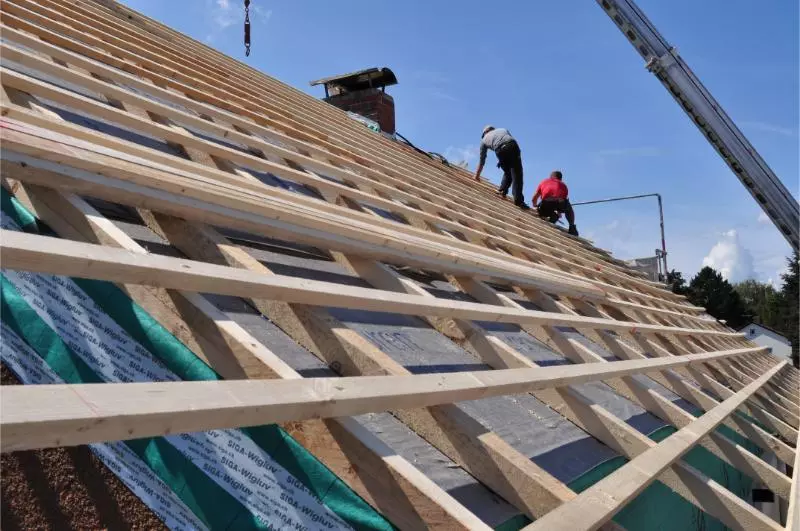
Roof felt is installed in overlapping horizontal layers, starting at the bottom and working up, so water runs from one layer over the next. An internal patch cannot copy this overlap properly. It also cannot fix the real defect, such as slipped tiles, damaged battens, failed flashing or a worn-out felt. A temporary patch buys you time until an inspection can take place, but should not be seen as the final solution.
When to Call a Professional Roofer
Some jobs are too big or too dangerous to do yourself. You should call professional roofers in Dorset if:
- The tear is large, or there are several tears.
- The felt is brittle, rotten or has been in place for many decades.
- Timbers (rafters or battens) look damp, soft or rotten.
- You can see missing, cracked or slipped tiles or slates.
- Water is entering during every rainstorm.
- Your ceiling below has stains, bulges, or is dripping.
- A storm has affected the roof.
- You are unsure what type of felt is installed.
A professional roofing contractor can lift the tiles, replace sections of felt, fit a modern breathable membrane where needed, and replace any rotten timber. They will also make sure the work meets British Standards BS 5534 and BS 5250. These standards set out how roofs in the UK should be installed and repaired safely.
At Extreme Roofing Pro Contractors Ltd, we provide roof repair services for homeowners, including felt and underlay repairs, tile and slate replacement, and leak investigation. If you have found a tear, a leak, or any of the signs above, contact our team, and we will help you find and fix the problem properly.
Frequently asked questions