The best way to remove roof moss is to brush it off while dry, bag it, clear the gutters, and then apply a roof-safe moss killer so spores cannot settle again quickly. Skip the pressure washer.
This guide walks through each step, explains what moss does to a roof in Dorset’s damp climate, and shows when it is safer to call a roof maintenance specialist in Dorset.
Is Moss Bad for Your Roof?
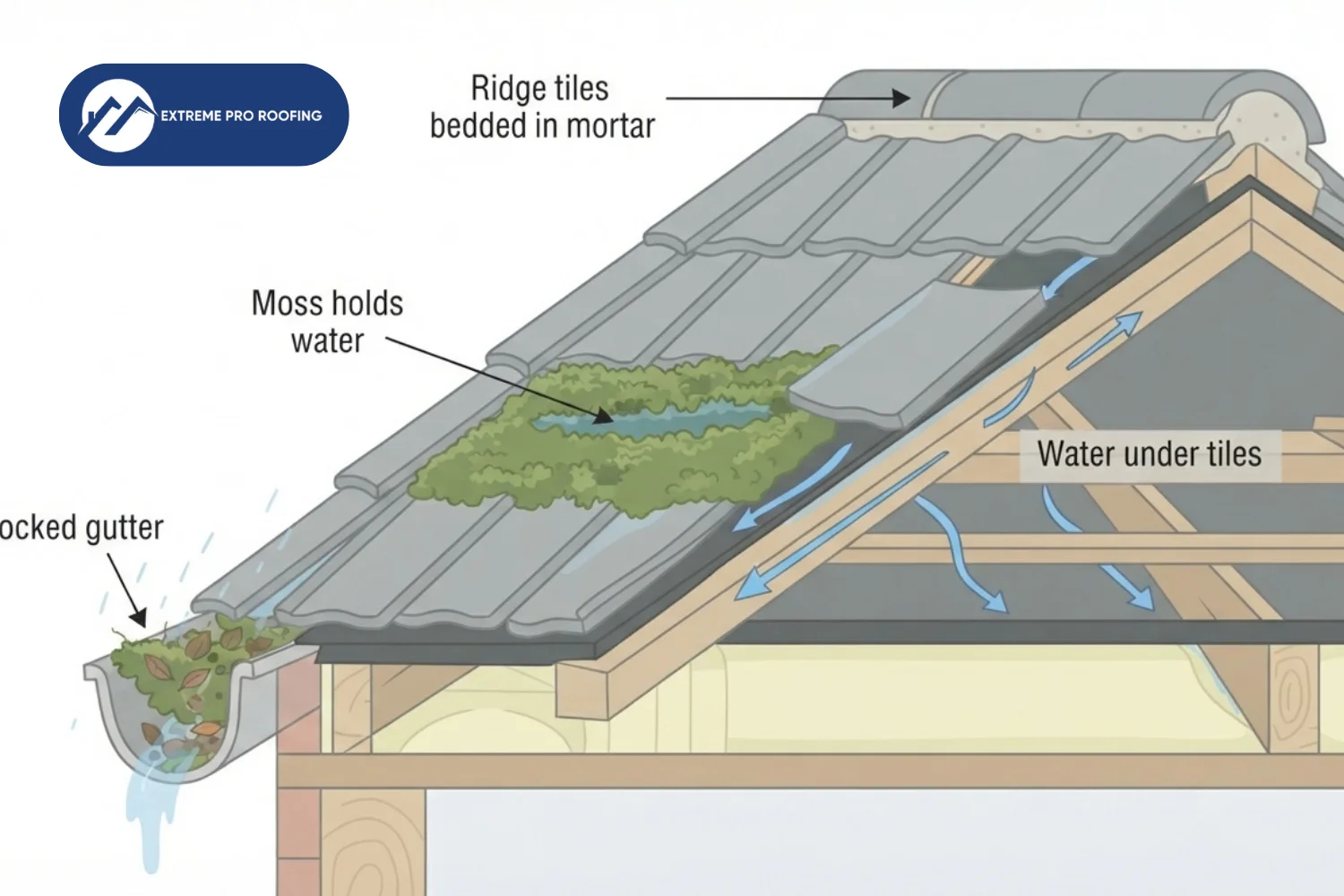
A thin green film is mostly cosmetic. Thick cushions differ because they act like a sponge and hold water against the tiles long after the rain stops. Over time, that trapped water can:
- Split tiles when it freezes and thaws
- Crumble the mortar bedding under ridge tiles
- Rot the timber battens underneath
- Send loose moss into gutters and downpipes
Moss rarely causes roof leaks alone, but it sets them up. A thick mat lifts tile edges, letting wind-driven rain under the overlaps, and blocked valleys or gutters send overflow towards the eaves and walls. If moss has already caused damage, our guide to roof repair costs shows what to expect.
What You Need Before You Start
Gather everything first so you are not stopping mid-job:
- A telescopic pole with a soft-bristled brush or plastic scraper head
- Dust sheets or a tarpaulin for the ground below
- Bin bags and a bucket
- Gloves, eye protection and non-slip footwear
- A garden pump sprayer with an extension lance
- A moss killer labelled for roofs
- A long-reach tool for gutters
How to Get Rid of Moss on Roof: Step by Step
These steps show how to clean moss off roof tiles you can reach safely from the ground. Anything steep, high or out of reach is a job for a professional.
Step 1: Choose a Dry, Mild Day and Check for Nests
Pick a dry day with no frost and no rain forecast for the next day or so. Dry moss lifts away in clumps, while soaked moss is heavy, slippery and smears across the tiles. Do not wet it first.
Also check the eaves and gutters for birds. Nesting runs from about March to September, and the Wildlife and Countryside Act 1981 protects active nests. The RSPB advises against starting work where birds are nesting, so autumn is the easiest window.
Step 2: Set Up Safely and Protect What Is Below
Work from firm, level ground and keep children and pets away from the area below. Spread sheets over borders, paving and plants. Cover the tops of downpipes with a cloth, so debris cannot wash in and block them.
Step 3: Brush or Scrape the Moss Off, Working Downwards
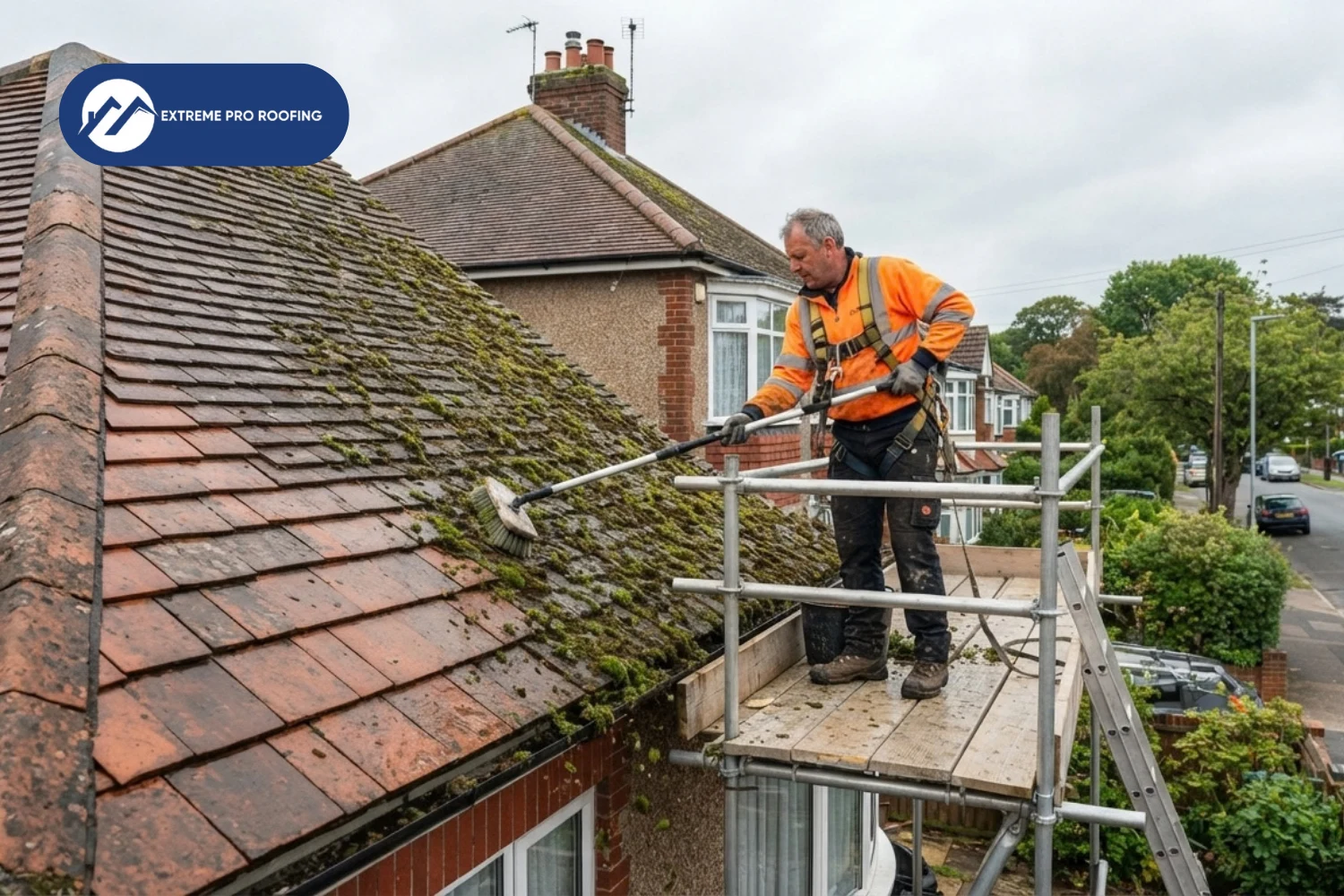
This is the core of removing moss from roof tiles. Start at the highest row you can safely reach and work down, so loose moss drops onto tiles you haven’t cleaned yet. A roofer working at height would start at the ridge.
- Use short, gentle strokes down the slope, in the direction water runs
- Never brush upwards, because that lifts tile edges
- Avoid wire brushes and metal scrapers, which scar clay tiles, slate and the surface of concrete tiles
Older tiles are brittle, so let the tool do the work.
Step 4: Collect and Bag the Moss
Gather the fallen moss from the sheets and bag it straight away. Left on the lawn or in the borders, it can drop spores that settle right back onto the roof.
Step 5: Clear the Gutters and Valleys
Remove the cloths from the downpipes, then scoop out the sludge of moss crumbs, grit, and leaves. Use the long-reach tool for gutters you can reach safely from the ground, and leave anything higher to a roofer. Then run a hose along the gutter to confirm water reaches the downpipe freely. Valleys collect the most debris and carry the most water, so check those too.
Step 6: Apply a Moss Killer
Brushing removes visible growth, but spores remain on the tile surface. A roof moss killer deals with those.
Choose a product labelled for roofs and your tile type, and follow the label for dilution and drying time. Then:
- Protect plants and ponds below before you spray
- Apply a light, even coat to the cleaned tiles with the sprayer at low pressure
- Pick a day when no rain is forecast within the drying time on the label
Do not rinse it off. The treatment needs to stay on the tiles to kill moss at the spore stage and slow regrowth. The roof can look patchy at first. Any moss that survives usually turns brown or black and washes away in the rain over the next few weeks, depending on the product.
Why Not Pressure Wash Your Roof?
A strong jet looks like the quick fix, but it strips the surface off concrete tiles, cracks old clay and chips slate. It also drives water under the overlaps. The roof looks spotless, then starts leaking weeks later. Soft washing is different. It is a professional method that relies on a low-pressure treatment rather than force, and it is best left to a trained roofer.
Can You Remove Moss Yourself or Should You Call a Roofer?
A soft brush on a long pole can handle moss you can safely reach from the ground. Anything higher is risky, and the savings aren’t worth it.
Call a roofer if:
- Moss covers large areas
- Tiles look lifted or loose
- Ceilings upstairs show damp patches
- Gutters overflow even after clearing
If two or more of these signs apply, contact Extreme Pro Roofing before the next heavy rain. Our professional moss removal and roof maintenance service includes safe manual moss removal and a roof inspection afterwards, with an honest report and no pressure to book unnecessary work. If you are unsure whether your roof needs cleaning or repairs, request a free, no-obligation quote and arrange an inspection to assess its condition.
Why Does Moss Grow on a Roof?
Moss needs damp, shade and a rough surface to grip. Dorset provides all three, so a small patch can spread quickly once it takes hold.
- Mild, wet weather and sea air around Bournemouth and Poole keep tiles damp for long stretches.
- North-facing slopes miss the low winter sun and dry out slowly.
- Overhanging trees cast shade and drop leaves into gutters.
- Porous concrete tiles and ageing mortar give spores plenty to hold on to.
How to Stop Moss Growing Back on Your Roof
No method will fully eliminate moss on roof surfaces in a climate this damp, but you can slow it right down. To stop moss growing on roof tiles:
- Trim branches that shade the slope
- Clear gutters and valleys every autumn
- Fit zinc or copper strips just below the ridge, because rain carries trace metal down the tiles and discourages growth
- Re-treat shaded or north-facing slopes sooner than sunny ones
Shaded roofs need attention sooner, so ask a local roofer to suggest a maintenance interval that suits your property. For a fuller year-round routine, work through our seasonal roof maintenance checklist.
Frequently asked questions