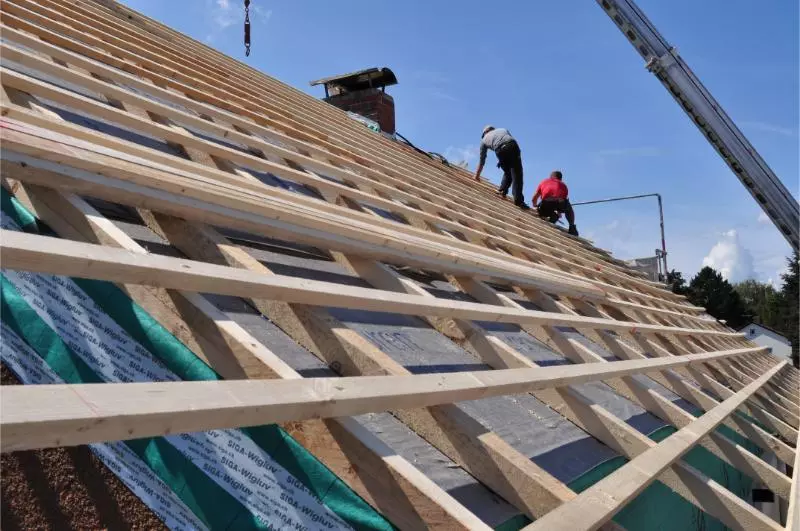
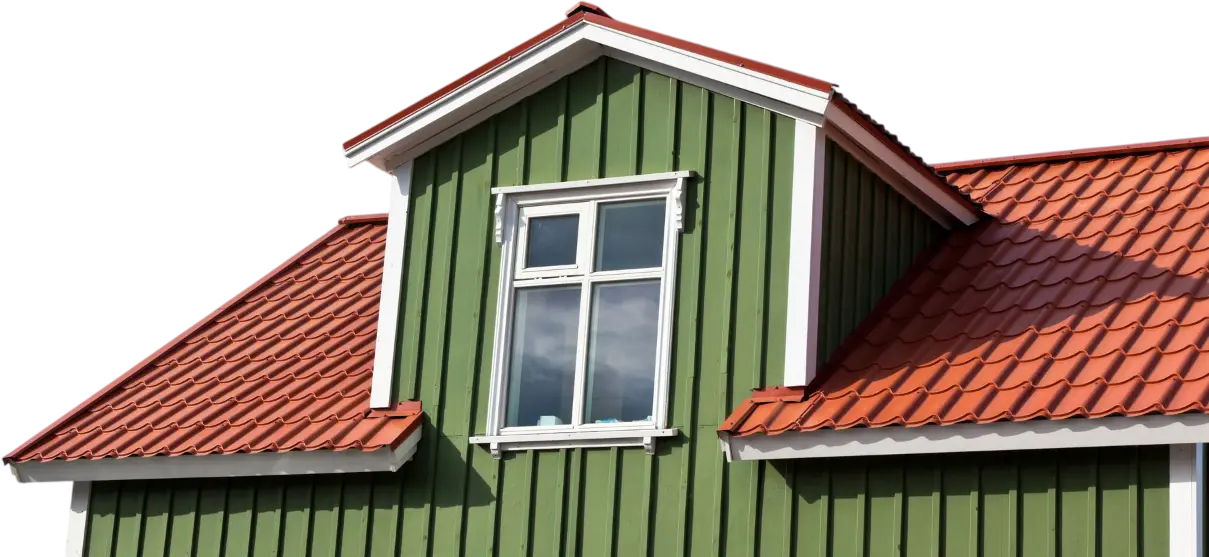
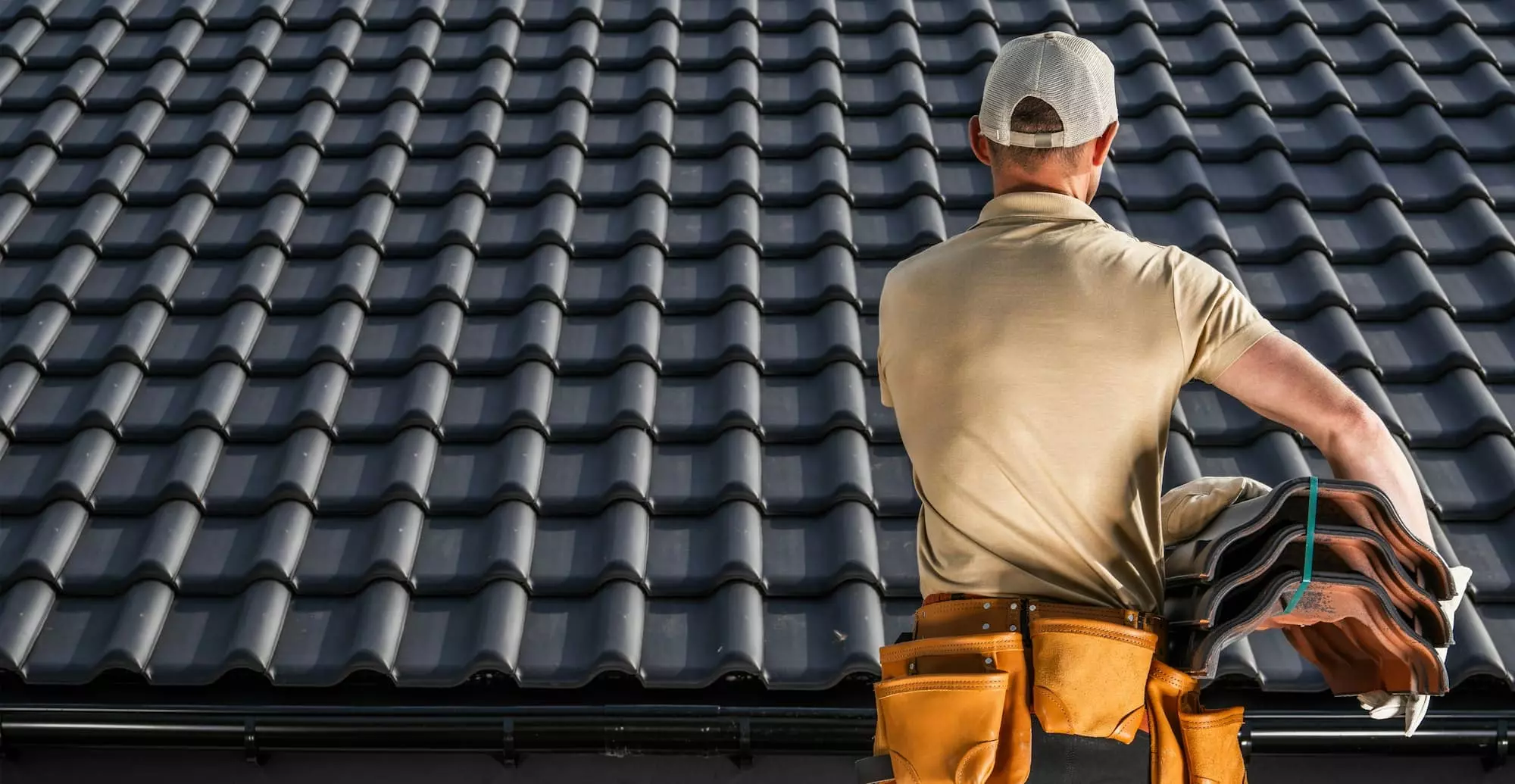
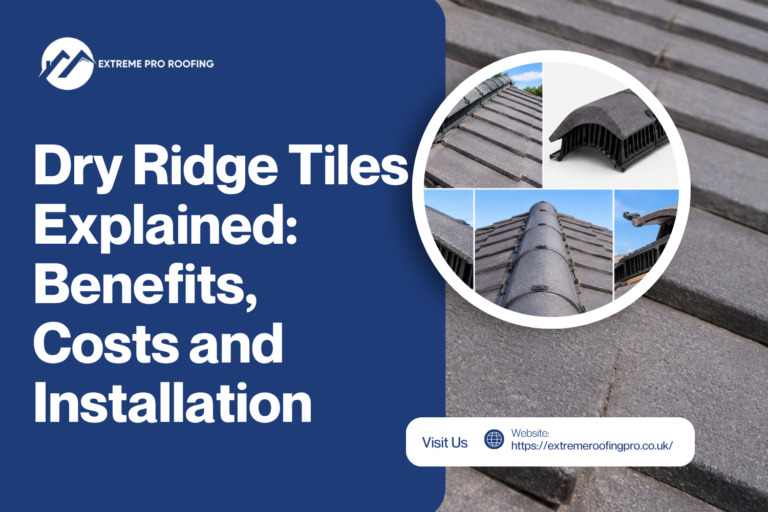
The ridge is the line along the very top of a pitched roof, and the ridge tiles that cover it take more wind and rain than any other part of the roof. For decades, people bedded those tiles in mortar. Over time, mortar cracks, crumbles, and falls out, so many UK homeowners now choose dry ridge tiles instead.
A dry ridge system fixes the tiles mechanically with screws, clips and a support strip, so there is no mortar to fail. This guide explains what dry ridge tiles are, how they compare with mortar, what they cost in 2026 and how they are installed, so you can decide whether they suit your roof.
If you are ready to switch, our team offers dry verge and ridge installation in Dorset.
What Are Dry Ridge Tiles?
Dry ridge tiles are ridge tiles made from concrete, clay, or slate that use a mechanical system to fix them to the roof instead of wet mortar. The tiles sit on a support, are held down with fixings, and are covered by connectors called ridge unions that seal the gaps between them.
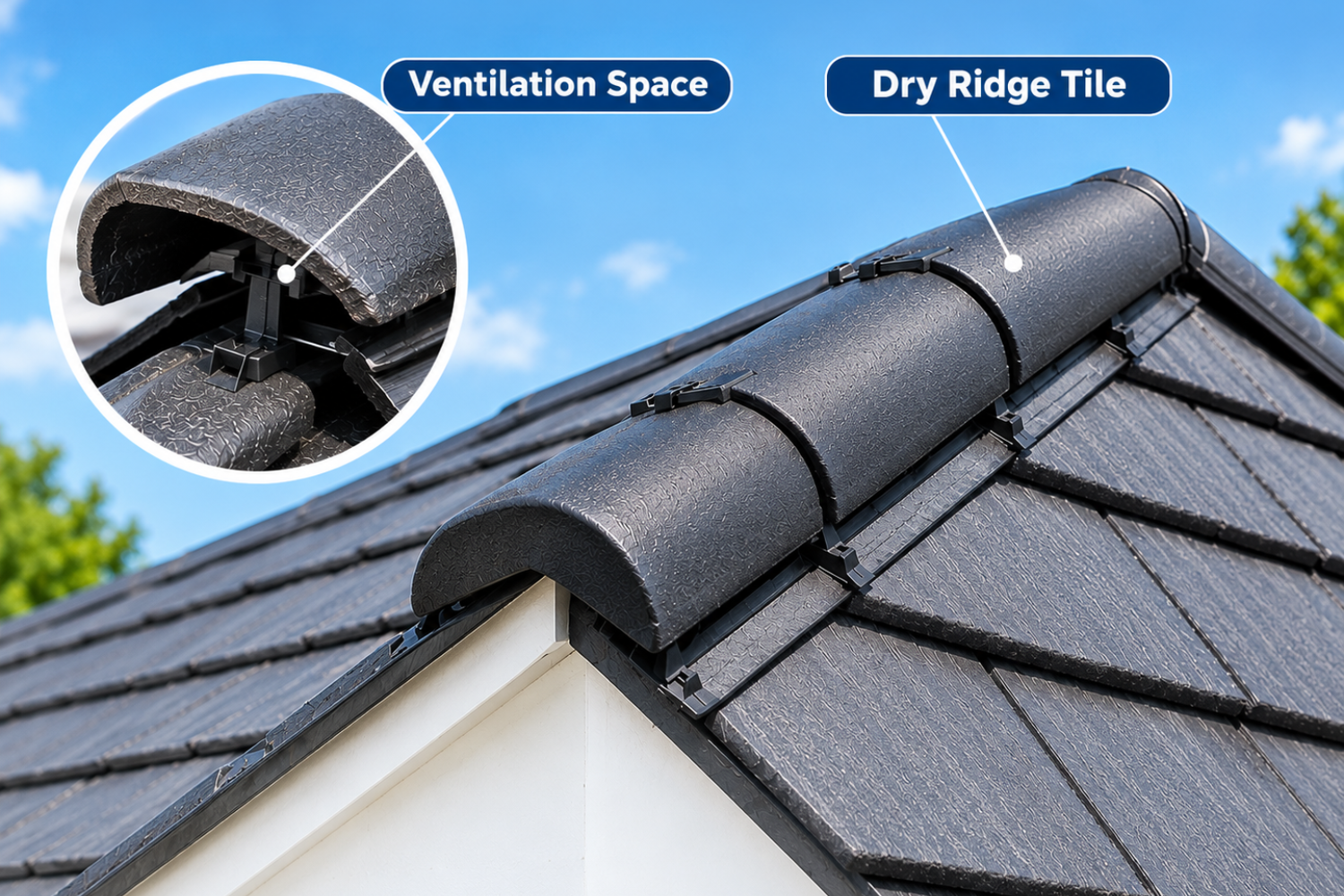
A typical dry ridge system includes:
- Ridge tiles in a colour and profile that match the roof coverings
- A ridge batten or support that the tiles are fixed to
- A ventilated roll or strip laid along the ridge, which lets air out of the loft while keeping rain and insects out
- Ridge unions that join one tile to the next
- Screws, clips or brackets that hold the tiles down, plus end caps to finish each run
The same approach is used on hips, the sloping lines where two roof faces meet, and on verges, the edges of a gable roof, where it is called a dry verge system.
Dry Ridge Tiles vs Mortar Ridge Tiles
Both methods finish the top of the roof, but they work differently. The table below shows the main differences.
Benefits of Dry Ridge Tiles
Less maintenance
Nothing relies on mortar, so you don’t need to repoint every few years. Once fitted, a dry ridge usually needs little more than a visual check after severe weather.
Built-in ventilation
Many systems include a ventilated ridge roll. It lets warm, damp air escape the loft, reducing condensation and protecting the roof timbers.
Better resistance to weather
The fixings hold the tiles firmly in strong winds, and the system tolerates small movements in the roof structure without cracking.
Faster, cleaner installation
Fitting is quicker than bedding tiles in mortar. Most ridges on a typical house can be finished in one to two days, with less mess and no waiting for mortar to cure.
Long lifespan
A good dry ridge system is designed to last as long as the roof covering itself, so you avoid paying for repeat repairs.
Disadvantages of Dry Ridge Tiles
Dry ridge tiles suit most roofs, but a few points are worth knowing before you book the work:
- The upfront cost is higher than rebedding tiles in mortar
- They may not suit period, listed or conservation area properties, where a traditional mortar finish can be expected
- The result depends on the quality of the fitting, and a badly fixed system can work loose in high winds
These points are why a roof inspection before any work is worth having.
How Much Do Dry Ridge Tiles Cost in the UK?
Dry ridge prices depend on ridge length, roof height and access, tile type, and whether you’re doing hips or verges at the same time UK prices in 2026 are as follows.
Several things push the price up or down:
- The total length of ridge, hips and verges
- Roof height and access, since scaffolding or a tower adds cost
- The type, colour and profile of the ridge tiles
- The condition of the roof tiles beneath the ridge
- Your location, as labour rates differ across the UK
Only fixing a few tiles rather than the whole ridge? See typical roof repair prices for smaller jobs.
How Are Dry Ridge Tiles Installed?
The exact steps depend on the manufacturer, but a professional installation follows this order.
Step 1: Inspect and Measure
The roofer checks the ridge, hips and verges, measures each run and chooses a system and colour that match your tiles. This initial check shows how much material you need and whether any problems need fixing before work starts. It also allows the roofer to give you an accurate written quote.
Step 2: Remove the Old Ridge
The roofer strips away the existing ridge tiles and mortar and clears the area. Removing all the old mortar leaves a clean, level surface for the new system. It also lets the roofer spot any hidden damage along the ridge line.
Step 3: Check the Roof Tiles
Repair or replace cracked or slipped tiles along the top courses to ensure a solid base. The dry ridge sits on these tiles, so any weak or damaged ones can cause problems later. Fixing them now helps the new ridge stay secure and weathertight.
Step 4: Fix the Ridge Batten
Fix the support that holds the ridge tiles along the ridge line. The batten must be straight, level and firmly fixed, because every ridge tile depends on it. A secure batten keeps the whole ridge stable in strong winds.
Step 5: Lay the Ventilated Roll
Lay the roll along the ridge and press it onto the tiles on both sides, closing the gap while letting air escape. This keeps out rain, dust, and insects while letting moisture escape the loft. Good ventilation helps reduce condensation and protects the roof timbers.
Step 6: Fit the Ridge Tiles
Tiles are laid along the ridge with a ridge union between each pair, then screwed or clipped down. The unions join the tiles together and cover the gaps between them. Mechanically fixing each tile means the ridge no longer relies on mortar to stay in place.
Step 7: Finish and Check
The roofer installs end caps and hip fittings, checks every run, and clears away all debris. The roofer ensures every tile is secure and the ridge is neat and weathertight. The site is then left clean and tidy, ready for you to enjoy a low-maintenance roof.
Working at height is dangerous, and dry ridge fitting is not a sensible DIY job for most homeowners. HSE guidelines are essential for safe roof work, and a professional roofing contractor can also repair any underlying roof problems during the same visit.
Signs Your Ridge Tiles Need Replacing
- Cracked or crumbling mortar along the ridge
- Loose, slipped or missing ridge tiles
- Pieces of mortar in the gutters or on the ground
- Damp patches or staining on the ceiling or loft timbers near the ridge
- Visible gaps along the ridge line
If you notice any of these, act promptly. A small ridge repair costs far less than fixing water damage inside the roof. If you spot these signs on your Dorset home, Extreme Pro Roofing can inspect your ridge and recommend the right fix. We fit dry ridge, dry hip, and dry verge systems on homes, extensions, and new builds across Dorset, Bournemouth, Southampton, and Salisbury. We replace failing mortar with colour-matched dry systems and fix any slipped edge tiles during the same visit.
Frequently asked questions