A leaking gutter joint is one of the most common problems homeowners face, and although it may seem like a small annoyance, an unfixed leak can cause damp walls, damaged fascias, and even foundation problems over time. Well-applied guttering joint seals are often the most effective fix, but success depends on choosing the right sealant and applying it correctly for your gutter type and joint.
If you are wondering how to seal leaking gutter joints, this guide covers the different joint types, how to choose the right sealant, how to apply it properly, and when a simple reseal isn’t enough. If you would rather have the job done properly first time, our team can handle gutter repair in Dorset for you.
Understanding Gutter Joint Types
Gutter joints differ, and knowing which type you have helps you choose the right sealing method and spot where leaks are most likely to start.
Union or Connector Joints
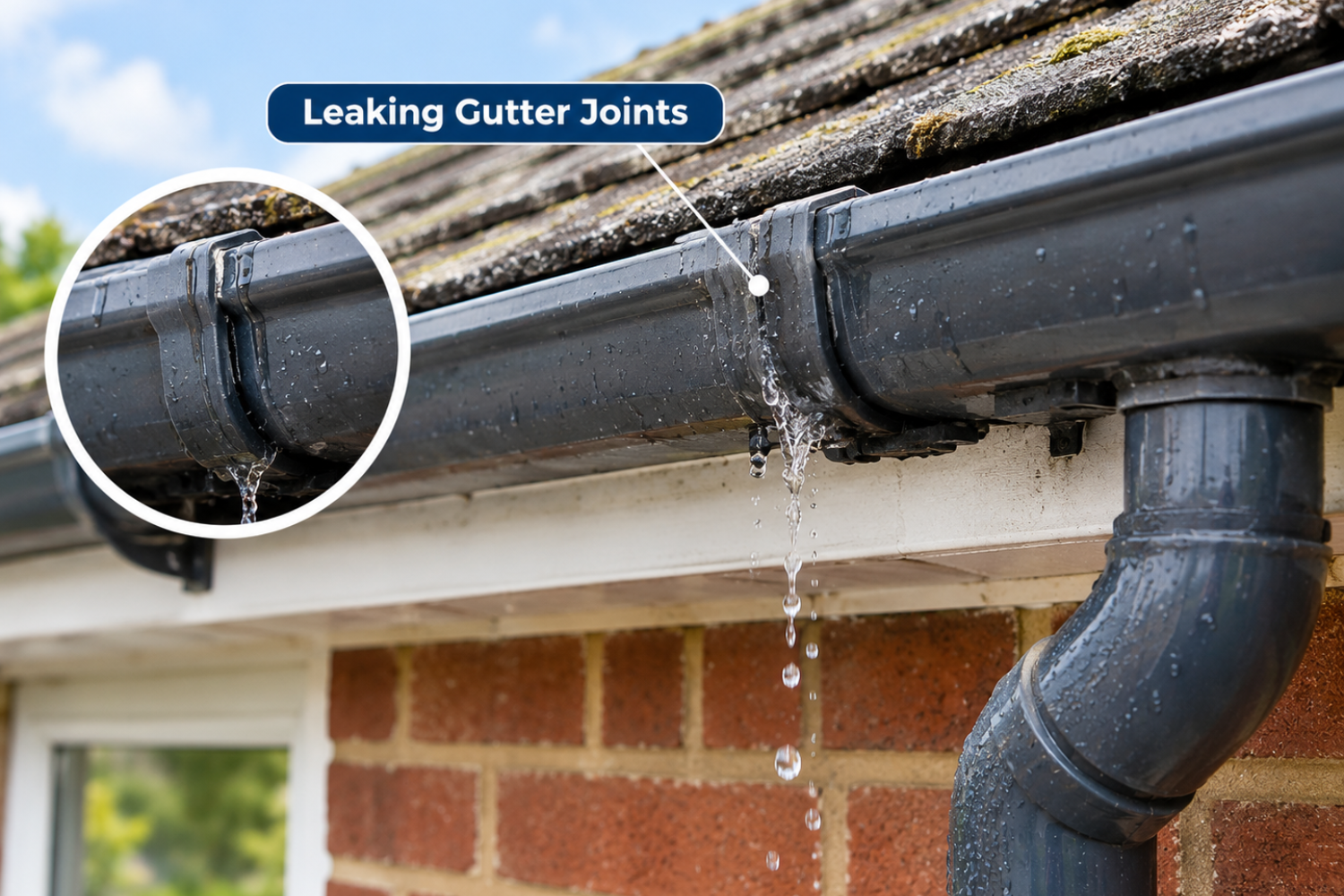
Union joints connect straight lengths of guttering and are among the most common failure points because they expand and contract constantly. They sit along flat sections of the run, so homeowners often spot dripping first after temperature changes loosen the seal.
Corner Joints
Corner joints guide water around the angles of a roofline and tend to take more stress from the flow, which makes them prone to wear. Water collects and turns sharply at these points, putting more pressure on the seal than on straight sections, particularly in heavy rain.
Outlet and Downpipe Joints
Outlet and downpipe joints connect the gutter to the downpipe and are especially vulnerable to blockages that increase pressure on the seal. When leaves or debris build up near the outlet, water pools instead of draining freely, which raises the risk of overflow and leaks at this connection.
Knowing the signs your gutters need cleaning helps you catch a blockage before it strains the seal.
Stop End Joints
Stop end joints close the open ends of a gutter run so water cannot spill along the roofline. They are especially prone to leaks on older systems because the cap can loosen or the sealant can dry out faster at such an exposed point.
Angle Joints
Angle joints are used where guttering changes direction without a sharp corner, such as along a hip roof. Like corner joints, they face higher water pressure, and because they are often fitted at unusual angles, getting an even seal can be harder.
Expansion Joints
Expansion joints allow guttering to expand and contract naturally, especially on longer runs or in systems exposed to big temperature swings. They let the material move, but their seals can wear out faster than standard joints unless you maintain or reseal them periodically.
Tools and Materials You'll Need
Having the right equipment ready before you start makes the job easier and gives a longer-lasting finish.
- Sealant gun
- Wire brush or sandpaper
- Cleaning solution or degreaser
- Gloves and safety gear
- Ladder and stabilizer
How to Seal Leaking Gutter Joints the Right Way
Application technique matters as much as the sealant itself, because even the best product will fail if applied poorly. Knowing how to seal gutter joints properly means every step helps create a seal that can handle weather and water pressure over time.
Preparing the Joint Surface
Begin by clearing leaves, dirt and debris from around the joint. Use a wire brush or sandpaper to remove old, flaking sealant and any rust or corrosion on metal gutters. Clean the surface with a suitable degreaser or cleaning solution to remove oils and residue that could prevent the new sealant from bonding. Then let the area dry completely, ideally on a dry day with low humidity, because moisture trapped under the sealant can make it fail early.
Applying an Even Sealant Bead
Load the sealant into the gun and cut the nozzle at an angle to match the joint gap width. Starting at one end, apply steady, even pressure to lay a continuous bead along the whole seam. Avoid stopping and restarting mid-joint, as this can leave weak points where the seal doesn’t fully connect. For wider gaps or union joints, a slightly thicker bead gives full coverage without leaving any section exposed.
Smoothing and Shaping the Seal
Use a sealant smoothing tool, or a gloved finger dipped in a little soapy water, to run along the bead and press it firmly into the joint for a smooth, even finish. This is not just for looks. It pushes sealant into small gaps and uneven areas, improving adhesion and reducing the chance of water getting through. Wipe off any excess sealant from the surrounding gutter before it sets.
Curing Time Before Testing
After application, the sealant needs time to cure fully before it meets water. Most sealants need at least 24 hours, but this depends on the product and the weather; cooler or more humid conditions can slow curing. Keep water out of the gutter and avoid rain exposure during this time. Once cured, test the joint by running water through the gutter system and watching closely for dripping or seepage.
This is why it pays to reseal in early autumn as part of your winter roof preparation, rather than waiting for the first cold snap.
Why Gutter Joints Leak Even After Sealing
Even a well-sealed joint can fail over time, and understanding why helps you avoid repeat problems.
- Using an incompatible sealant for the gutter material is a common cause. Using the wrong sealant on plastic or metal guttering can reduce adhesion and cause early failure.
- Applying sealant to a wet or dirty surface stops it from bonding properly, so leaks often return soon after the repair.
- Applying too thin a layer of sealant can leave gaps or weak spots that can’t withstand water pressure.
- Skipping the recommended cure time before testing weakens the seal before it fully sets, making early failure more likely.
- Thermal expansion causes gutters to expand and contract with temperature changes, gradually stressing and breaking the seal at joints.
- UV exposure and weathering wear down the sealant until it turns brittle, cracks or loses flexibility, which is often why homeowners have to fix the same leaking gutter joint more than once.
How Long Does Gutter Sealant Last?
How long a gutter seal lasts depends on the sealant type and the conditions it faces. Silicone and polyurethane sealants usually last several years in normal weather, while lower-quality or incompatible sealants can fail much sooner.
When It's Worth Calling a Professional
Sealing one easily accessible gutter joint is often a DIY job with the right tools and preparation. However, ongoing leaks, sagging gutters or several problem areas along the roofline usually mean it is worth calling a professional.
At Extreme Pro Roofing, our professional roofers carry out gutter repair services in Dorset that address the full extent of the problem, not just the visible symptoms. We use the right sealant for your gutter material and properly prepare and seal every joint for lasting results.
Conclusion
Sealing a leaking gutter joint takes more than applying sealant. It depends on choosing the right product for your gutter material and following the correct application process. Getting these details right helps prevent recurring leaks and protects your property from water damage over time.
If you are dealing with a persistent leak or are not sure which sealant suits your gutters, Extreme Pro Roofing is here to help.
Contact us today to arrange an inspection and get expert advice tailored to your property.
Frequently asked questions